
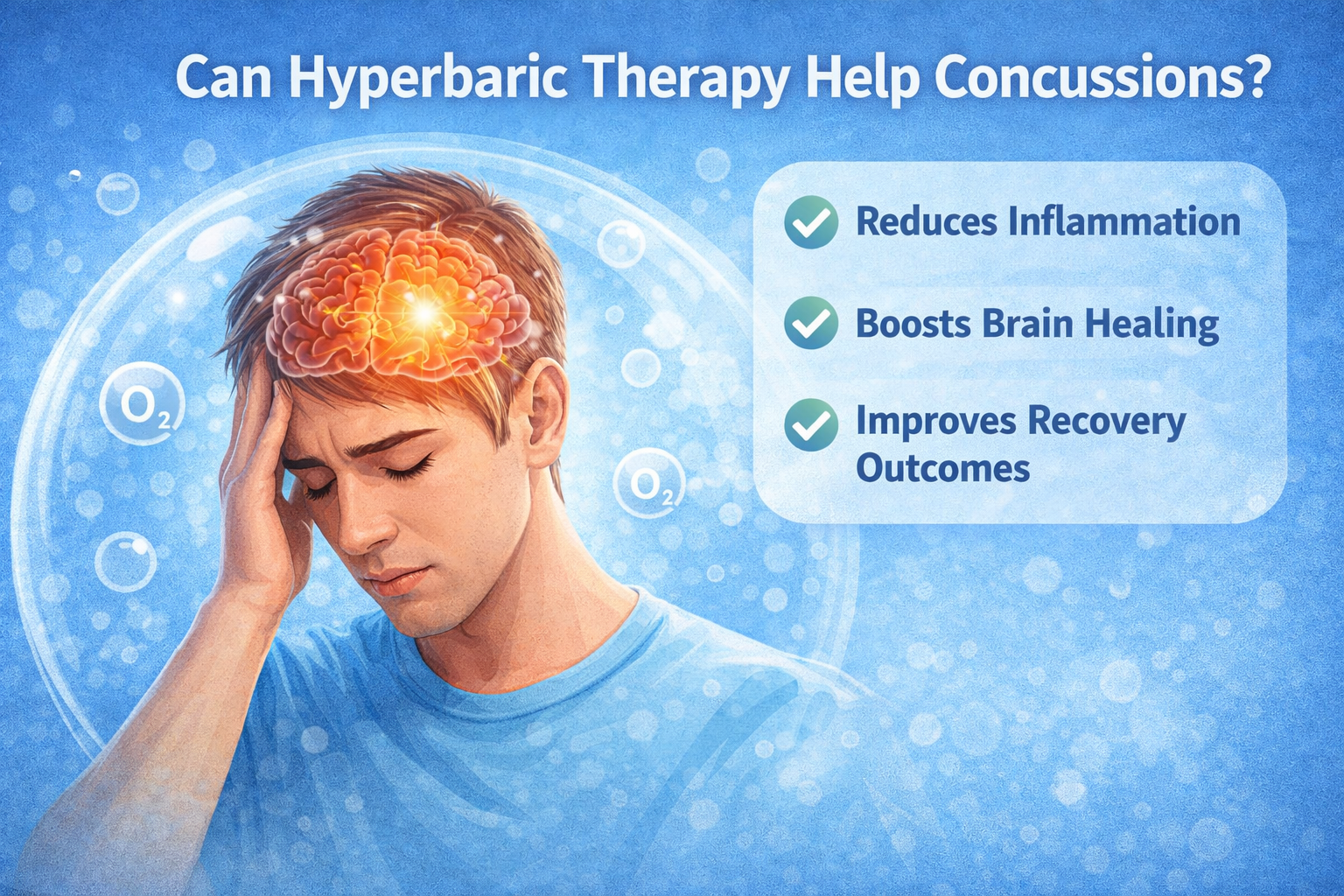
Can Hyperbaric Therapy Help Concussions?
Can Hyperbaric Therapy Help Concussions?
Concussions are one of the most common forms of brain injury, affecting athletes, accident victims, and individuals who experience falls or head trauma. Because the brain is such a complex and delicate organ, recovery can sometimes take longer than expected.
Many people searching for additional support during recovery begin researching hyperbaric therapy for concussion. They want to understand whether increased oxygen exposure could help the brain recover after injury.
While every situation is unique, interest in oxygen therapy for brain injury has grown as researchers continue exploring how oxygen supports the body’s natural healing processes.
This article explains what concussions are, how they affect the brain, and why some individuals explore hyperbaric oxygen therapy during recovery.
What Is a Concussion?
A concussion is a type of traumatic brain injury (TBI) caused by a blow or jolt to the head that disrupts normal brain function.
Concussions can occur during:
- Sports injuries
- Falls
- Car accidents
- Workplace accidents
- Recreational activities
Even when there is no visible injury, the brain may experience changes in function due to the impact.
Common symptoms of concussion include:
- Headaches
- Dizziness
- Confusion
- Memory difficulties
- Brain fog
- Sensitivity to light or noise
- Fatigue
Most concussions improve with time and rest, but some individuals experience lingering symptoms that can affect daily life.
How Concussions Affect the Brain
When the brain experiences trauma, several changes may occur inside the brain tissue.
These changes can include:
- Temporary disruption of normal brain signaling
- Changes in blood flow to certain areas of the brain
- Inflammation
- Increased demand for oxygen and energy
Because brain cells require significant amounts of oxygen to function properly, disruptions in oxygen delivery can impact recovery.
This is one reason some individuals begin researching oxygen therapy brain injury support during their recovery process.
How Hyperbaric Oxygen Therapy Works
Hyperbaric oxygen therapy (HBOT) involves breathing oxygen in a pressurized environment inside a specialized chamber.
The increased pressure allows oxygen to dissolve more efficiently into the bloodstream and body fluids. This helps oxygen travel deeper into tissues throughout the body, including the brain.
Because oxygen plays a critical role in cellular repair and energy production, increasing oxygen availability may support the body’s natural healing processes.
For individuals researching hyperbaric therapy concussion recovery, the goal is often to help ensure brain tissues receive adequate oxygen during the recovery period.
Why Oxygen Is Important for Brain Recovery
The brain consumes approximately 20 percent of the body’s oxygen supply, even though it represents only a small portion of body weight.
This high demand for oxygen means that adequate oxygen delivery is essential for:
- Cellular energy production
- Brain signaling and communication
- Tissue repair
- Normal neurological function
Some researchers believe that increasing oxygen availability through hyperbaric therapy may help support the brain’s natural recovery mechanisms following injury.
What Happens During a Hyperbaric Therapy Session?
People considering hyperbaric therapy for concussion often want to know what the experience is like.
During a typical session:
- You relax inside a soft hyperbaric chamber
- The pressure gradually increases to a mild therapeutic level
- You breathe oxygen-rich air while resting comfortably
Sessions usually last between 60 and 90 minutes.
Many individuals use the time to relax, listen to music through the room’s speaker system, write, journal, or play quiet games such as cards.
Once the session is complete, the chamber slowly returns to normal pressure.
Why Some Individuals Explore Hyperbaric Therapy After a Concussion
People exploring oxygen therapy brain injury recovery often hope to support several aspects of healing.
Some individuals seek hyperbaric therapy to potentially support:
- Brain oxygen delivery
- Reduced inflammation
- Cellular repair processes
- Cognitive function
- Energy and mental clarity
Hyperbaric therapy is often considered as part of a broader recovery approach that may include rest, medical care, rehabilitation, and lifestyle support.
How Many Hyperbaric Sessions Are Typically Used?
The number of sessions used for concussion recovery can vary depending on individual goals and circumstances.
Some individuals explore a short series of sessions, while others may continue therapy for a longer period as part of their wellness routine.
A knowledgeable provider can help discuss potential options and determine an approach that aligns with personal health goals.
Is Hyperbaric Therapy Safe?
Mild hyperbaric therapy is designed to be comfortable and relaxing.
Before beginning sessions, providers typically review:
- Medical history
- Current health conditions
- Safety guidelines
This helps ensure that hyperbaric therapy is appropriate for the individual.
Supporting Concussion Recovery
Recovering from a concussion requires patience, rest, and proper care. Because every brain injury is different, treatment plans should always be guided by qualified healthcare professionals.
For individuals researching additional support options, learning more about hyperbaric therapy concussion recovery may provide helpful information about how oxygen supports the body’s natural healing processes.
Learn More About Oxygen Therapy for Brain Injury
If you are exploring options that may support recovery after a concussion, learning more about oxygen therapy brain injury support can help you better understand how oxygen plays a role in brain health.
Understanding how hyperbaric oxygen therapy works can help individuals make informed decisions about their recovery journey. Book your free consultation today.